Last updated:
Tusked Elephant
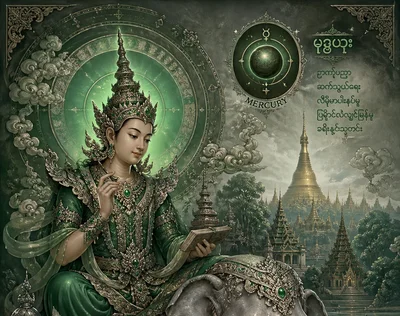
Burmese Zodiac Sign · Mercury (AM) · Ruled by Mercury
 ♀
♀Tusked Elephant
Burmese Zodiac Sign
Mercury (AM)
Ruled by Mercury
 ♂
♂About Tusked Elephant
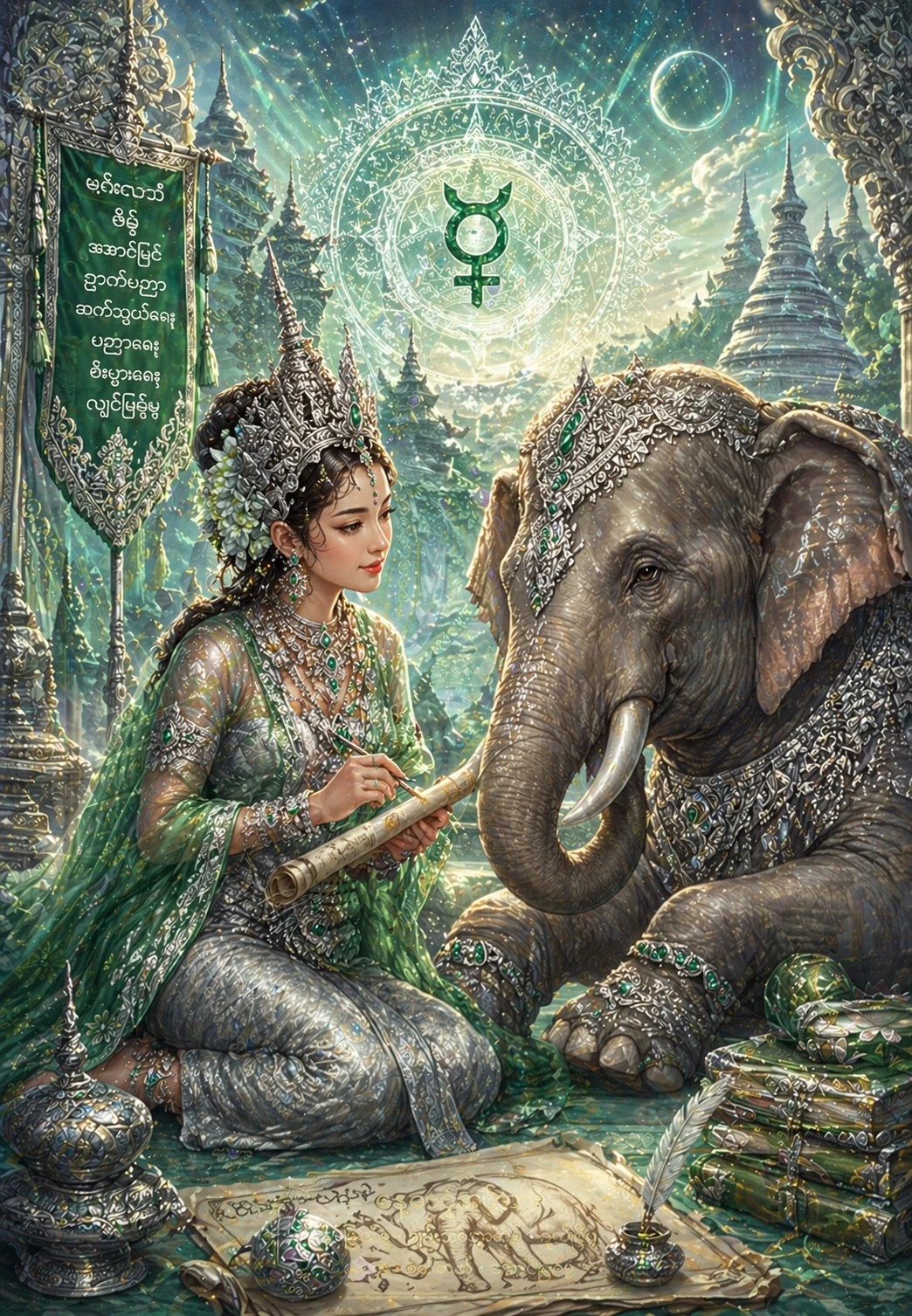
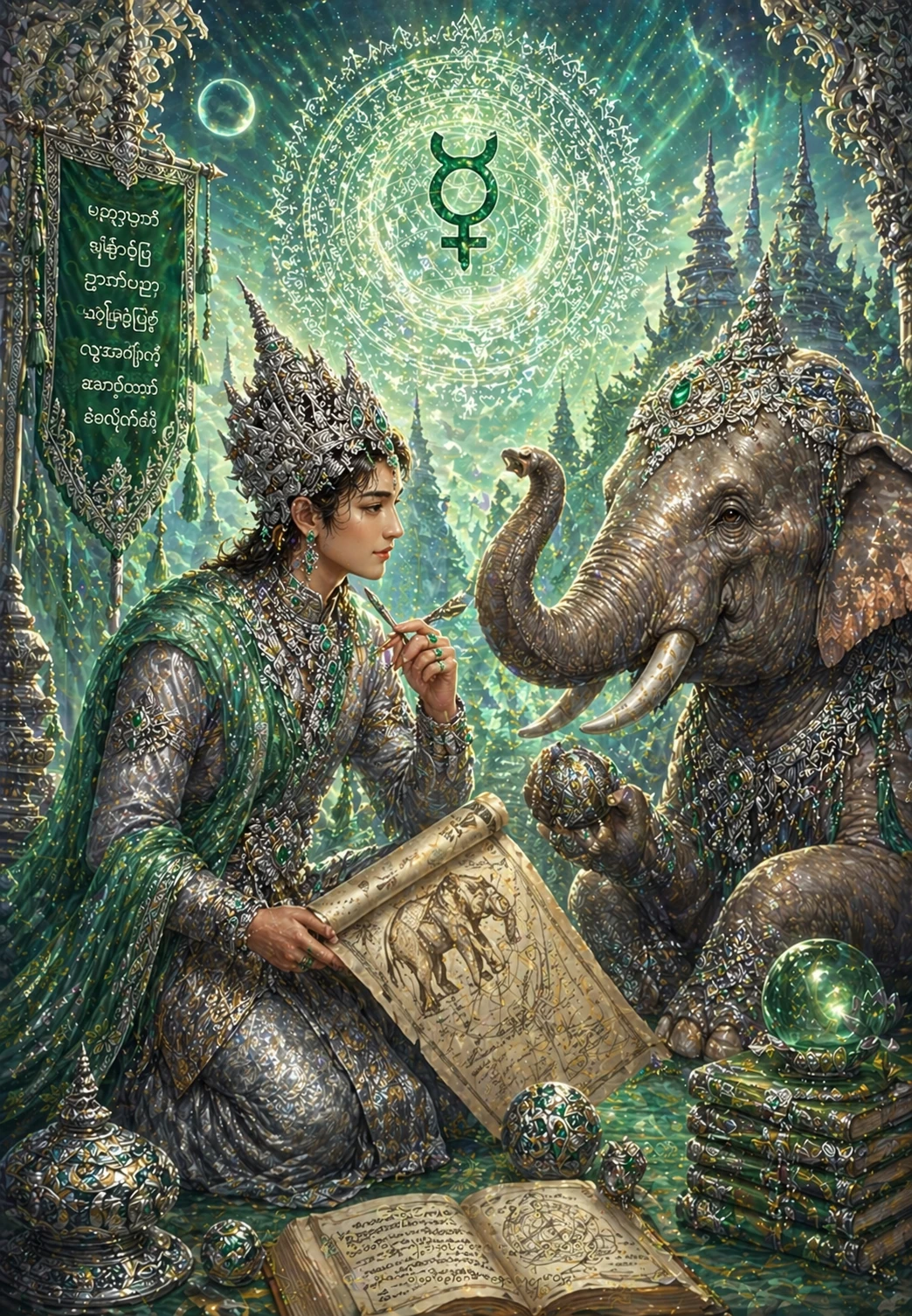
Born on Wednesday morning, the Tusked Elephant represents the eloquent, mercurial side of Mercury. These individuals are gifted speakers and agile thinkers who thrive in intellectual pursuits. Their minds are sharp as tusks, cutting through confusion to find truth.
Burmese astrology is unique in splitting Wednesday in two, and those born before noon belong to the Tusked Elephant, ruled by Mercury and posted at the southern corner of the pagoda. Morning Wednesday-born people are gifted with Mercury's eloquence, agility of mind, and quicksilver wit.
Tusked Elephant people are brilliant communicators with razor-sharp intellect. They excel in speech, writing, trade, and any work of the mind, processing information at remarkable speed. Articulate and quick, they cut through confusion like tusks through brush to reach the heart of a matter.
That mercurial brilliance can become superficiality, restlessness, or a tendency to use clever words for manipulation. But the morning Wednesday native's intellect and eloquence make them persuasive, adaptable, and endlessly engaging.
Learn more about the origins, history, and symbolism of this tradition on the Burmese Zodiac overview.
Tusked Elephant at a Glance
- System
- Burmese Zodiac
- Element
- Mercury (AM)
- Ruling Body
- Mercury
- Compatible With
- Tiger, Tuskless Elephant, Guinea Pig
- Lucky Color
- Green
- Lucky Number
- 4
- Key Traits
- Witty, Volatile, Quick-minded, Articulate, Mercurial
The Tusked Elephant Personality
The Tusked Elephant personality is witty, articulate, and quick-minded. Ruled by Mercury, they are gifted speakers and agile thinkers who thrive on ideas and communication. Scattered focus is their pitfall. Directing their mental speed toward depth as well as breadth unlocks their full brilliance.
Tusked Elephantin Love & Relationships
In love Tusked Elephant are charming, communicative, and playful, keeping the connection lively with wit. In Burmese tradition they pair well with the Tiger, Tuskless Elephant, and Guinea Pig, signs that engage their mind or soften their edge. They need a partner who loves conversation.
Tusked ElephantCareer & Ambition
Tusked Elephant excels in fields built on words and ideas — writing, teaching, commerce, law, media, and negotiation. Their quick wit and eloquence make them persuasive and adaptable. They thrive wherever sharp thinking and communication carry the day.
Mythology & Symbolism of Tusked Elephant
The split of Wednesday is the most distinctive feature of Burmese astrology: the morning belongs to Mercury proper and the Tusked Elephant in the south, the afternoon to the shadow-planet Rahu. Devotees born on Wednesday morning pour water over the tusked elephant at the southern post to honor Mercury.
The elephant is among the most revered animals in Burmese Buddhist culture, a symbol of intelligence, memory, and dignified strength. With its tusks intact and Mercury as its ruler, the morning Wednesday sign became an emblem of eloquence, sharp intellect, and articulate power.
Key Personality Traits
Those born under Tusked Elephant are defined by a distinctive blend of personality qualities that shape how they navigate the world. These core traits, drawn from centuries of Burmese astrological tradition, reveal the essence of this sign.
Strengths & Weaknesses
Every zodiac sign carries a duality — gifts that empower and shadow traits that challenge. Recognizing both sides of Tusked Elephant helps harness its full potential for personal growth.
✨ Strengths
Brilliant communicator with razor-sharp intellect. The Tusked Elephant excels in speech, writing, and commerce. Their quick mind processes information at remarkable speed.
⚡ Weaknesses
Unpredictable and prone to sudden mood shifts. Can be superficial, scattered in focus, and use their verbal gifts for manipulation.
Lucky Attributes
Ancient Burmese astrologers associated Tusked Elephantwith specific auspicious elements. Aligning with these can help amplify the sign's positive energy.
Compatibility
Astrological compatibility in the Burmese tradition examines how Tusked Elephant's energy harmonizes with other signs — revealing which pairings thrive together in love, friendship, and partnership.
Tusked Elephant is most compatible with: Tiger, Tuskless Elephant, Guinea Pig
 Tiger
Tiger Tuskless Elephant
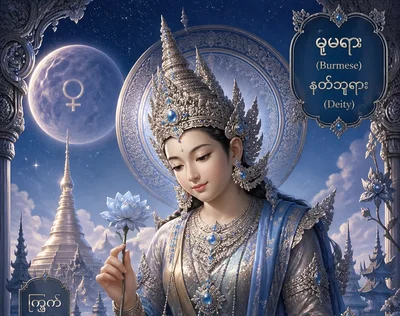 Guinea Pig
⭐ Tusked Elephant Celebrities
These well-known personalities share the Tusked Elephant sign.
U Thant
January 22, 1909
The Burmese diplomat served as the third UN Secretary-General, navigating the Cuban Missile Crisis.
Megawati Sukarnoputri
January 23, 1947
She became Indonesia's first female president and is the daughter of founding president Sukarno.
Ho Chi Minh
May 19, 1890
He led Vietnam to independence from France and his name literally means "He Who Enlightens."
Michelle Yeoh
August 6, 1962
She became the first Asian woman to win the Best Actress Oscar for "Everything Everywhere All at Once."
Taufik Hidayat
August 10, 1981
The Indonesian badminton star won Olympic gold with a perfect backhand smash considered the best in history.
Mark Zuckerberg
May 14, 1984
He co-founded Facebook in his Harvard dorm room at age 19, becoming one of the world's youngest billionaires.
Frequently Asked Questions about Tusked Elephant
Who is born under the Burmese Tusked Elephant sign?
Anyone born on a Wednesday morning (before noon) is a Tusked Elephant, ruled by Mercury and posted at the pagoda's southern corner.
Why is Wednesday split in Burmese astrology?
Burmese tradition divides Wednesday between Mercury (morning, Tusked Elephant) and the shadow-planet Rahu (afternoon, Tuskless Elephant), making birth time decisive.
Which Burmese signs are most compatible with the Tusked Elephant?
The Tusked Elephant pairs well with the Tiger, Tuskless Elephant, and Guinea Pig, signs that engage its mind.
🌍 Tusked Elephant Across Cultures
Tusked Elephant is unique to the Burmese Zodiac system.
This sign is unique to the Burmese zodiac, which assigns signs based on the day of the week you were born — a system not replicated elsewhere.
Not every zodiac sign has a direct counterpart in other traditions. Cross-system equivalence depends on shared date ranges, animal cycles, or archetypal parallels — and many zodiac systems were developed independently, with unique structural foundations that don't map neatly onto other frameworks. The Burmese Zodiac uses a fundamentally different basis for determining signs, which means Tusked Elephant stands as a culturally distinct archetype with no direct analog elsewhere.
While there is no direct counterpart in other zodiac traditions, you can still discover how different systems interpret your birth date by exploring the systems below.
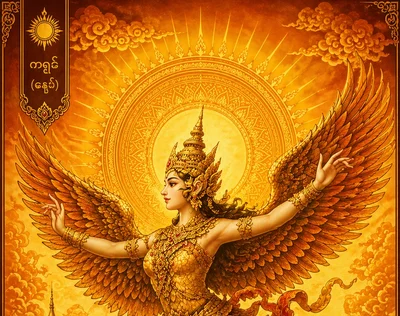
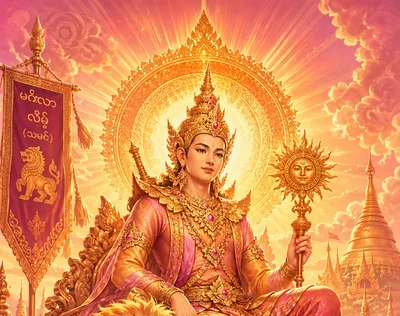
Other Burmese Zodiac Signs
Explore Other Zodiac Systems
Discover your sign in other ancient traditions from around the world.