Last updated:
Shahrivar (Wheat Ear)
Persian Zodiac Sign · Earth · Ruled by Mercury
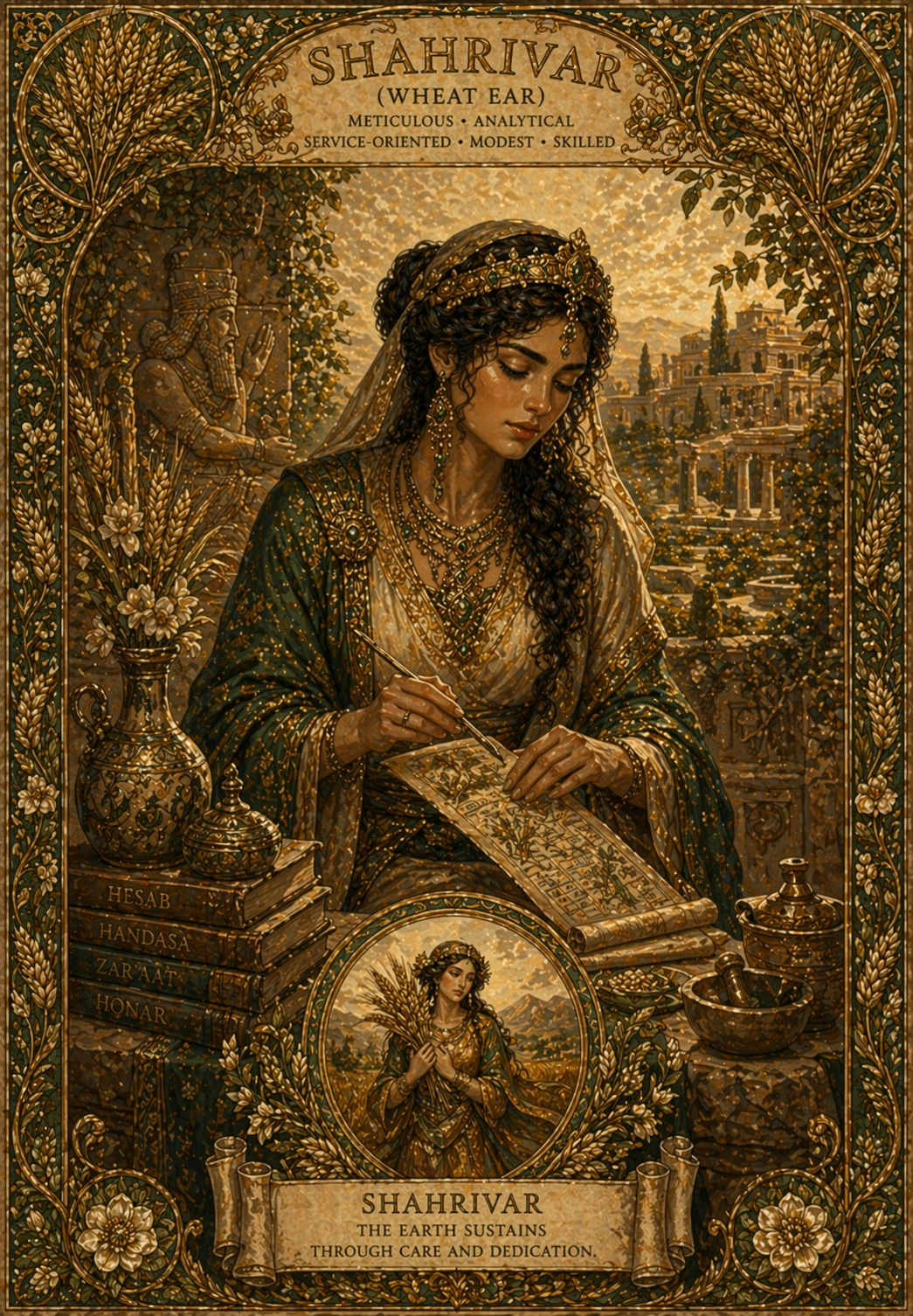 ♀
♀Shahrivar (Wheat Ear)
Persian Zodiac Sign
Earth
Ruled by Mercury
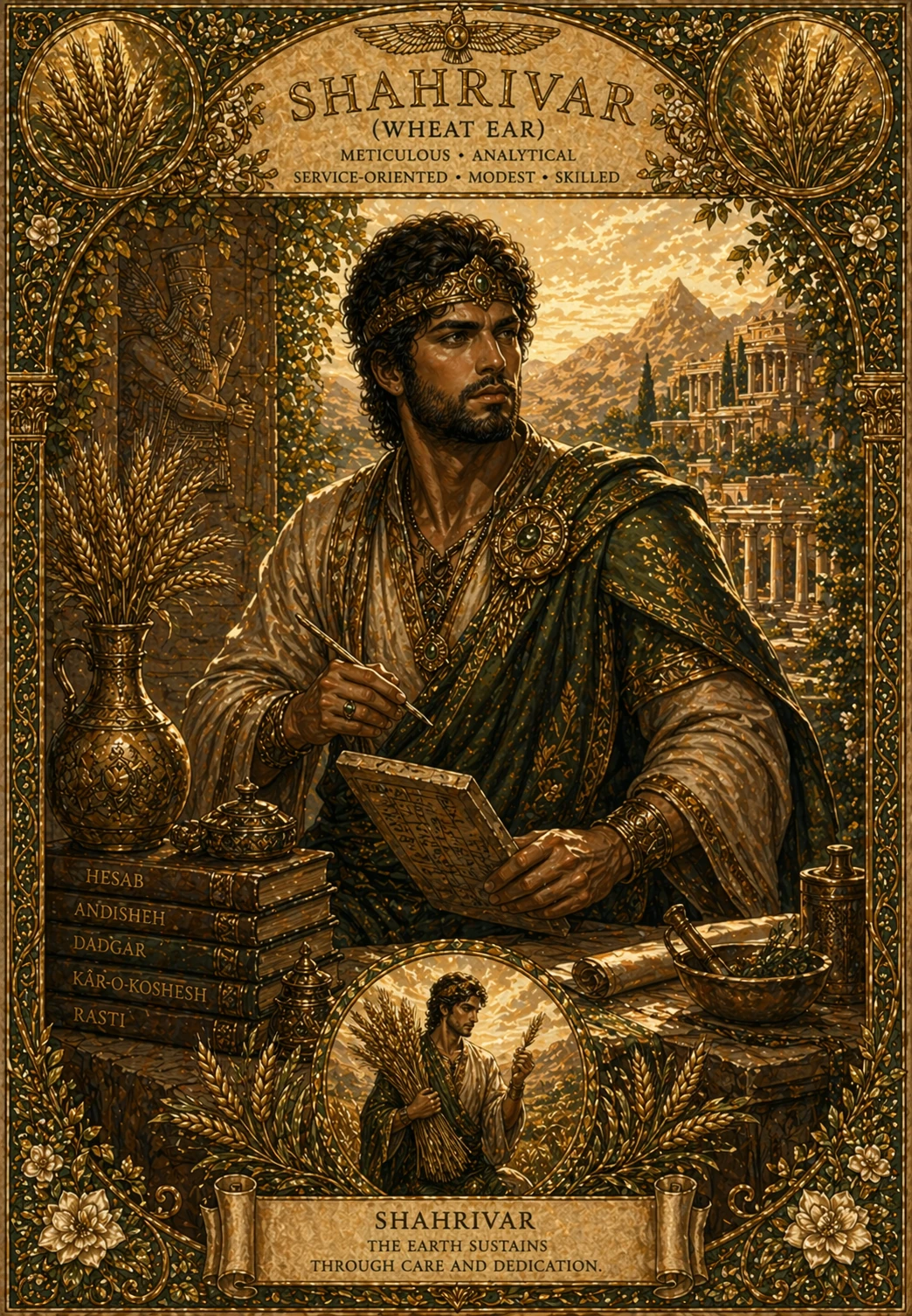 ♂
♂About Shahrivar (Wheat Ear)
Shahrivar, the month of desirable dominion, produces children who harvest wisdom from the fields of experience. The Wheat Ear represents the abundance that comes from careful cultivation — a virtue deeply honored in Persian agrarian tradition. These souls serve the world with precision, skill, and quiet dignity.
Shahrivar is the sixth month of the Persian year, the season of harvest. Aligned with the archetype of the Wheat Ear and ruled by Mercury, those born under this sign possess sharp analytical minds and skilled, capable hands. They are the meticulous craftspeople of the Persian zodiac — modest, precise, and driven by a genuine desire to improve the world through practical service rather than fanfare.
The month is named for Khshathra Vairya, "Desirable Dominion," one of the Amesha Spentas and the divine guardian of just rule, the sky, and metals. The pairing is telling: Shahrivar marries the ideal of righteous power with the humble labour of the harvest. These souls understand that true dominion is earned through diligence, that abundance comes only from careful cultivation — a virtue deeply honoured in Persia's agrarian heart — and they serve with a quiet dignity that asks for little credit.
Their pursuit of excellence can become its own burden. An eye trained to spot every flaw may turn critical, anxious, and perfectionistic, blinding them to the beauty in imperfection and holding others to impossibly high standards. The mature Shahrivar learns that service is meant to nourish, not to judge — offering their formidable skill with compassion — and becomes the indispensable, steadying hand that quietly makes everything around them better.
Learn more about the origins, history, and symbolism of this tradition on the Persian Zodiac overview.
Shahrivar (Wheat Ear) at a Glance
- System
- Persian Zodiac
- Element
- Earth
- Ruling Body
- Mercury
- Compatible With
- Ordibehesht, Dey
- Lucky Color
- Forest Green
- Lucky Number
- 4
- Key Traits
- meticulous, analytical, service-oriented, modest, skilled
The Shahrivar (Wheat Ear) Personality
Shahrivar natives are meticulous, analytical, and devoted to service, refining everything they touch with skilled precision. Ruled by Mercury, they pair sharp minds with capable hands and genuine modesty. Their growth lies in self-acceptance — softening their inner critic and learning to see the beauty in imperfection rather than only its flaws.
Shahrivar (Wheat Ear)in Love & Relationships
In love Shahrivar is thoughtful, devoted, and quietly attentive, showing affection through acts of care and practical service rather than grand gestures. They pair most naturally with fellow earth signs Ordibehesht and Dey, who value their reliability and depth. Shahrivar gives steadfast, helpful love; their challenge is to release the urge to perfect or fix a partner and simply accept and enjoy them as they are.
Shahrivar (Wheat Ear)Career & Ambition
Ruled by Mercury, Shahrivar excels wherever precision and analysis matter — medicine and healthcare, research, engineering, accounting, editing, quality control, nutrition, and skilled craftsmanship. They are meticulous, reliable, and devoted to doing things well. The Wheat Ear does its finest work perfecting systems and serving others, where its discerning eye and steady hands become truly indispensable.
Mythology & Symbolism of Shahrivar (Wheat Ear)
Shahrivar honours Khshathra Vairya, "Desirable Dominion" — one of the Amesha Spentas, the Bounteous Immortals of Zoroastrian belief, and the guardian of just sovereignty, the sky, and metals. The dominion he embodies is power exercised righteously, the rule the soul is meant to attain over itself and the world.
The Wheat Ear that gives the sign its emblem is the fruit of the harvest, the reward of patient cultivation honoured throughout Persia's agrarian history. Through Khshathra Vairya and the ripened grain, Shahrivar unites the ideal of just power with the humble dignity of useful labour, casting the sign as the skilled servant of a better world.
Key Personality Traits
Those born under Shahrivar (Wheat Ear) are defined by a distinctive blend of personality qualities that shape how they navigate the world. These core traits, drawn from centuries of Persian astrological tradition, reveal the essence of this sign.
Strengths & Weaknesses
Every zodiac sign carries a duality — gifts that empower and shadow traits that challenge. Recognizing both sides of Shahrivar (Wheat Ear) helps harness its full potential for personal growth.
✨ Strengths
Exceptional attention to detail and a genuine desire to improve the world through practical service. Shahrivar people possess sharp analytical minds and skilled hands. Their modesty, precision, and work ethic make them indispensable.
⚡ Weaknesses
Can be overly critical, anxious, and perfectionistic. May become so focused on flaws that they fail to see the beauty in imperfection. Their self-criticism can be paralyzing, and they may judge others by impossibly high standards.
Lucky Attributes
Ancient Persian astrologers associated Shahrivar (Wheat Ear)with specific auspicious elements. Aligning with these can help amplify the sign's positive energy.
Compatibility
Astrological compatibility in the Persian tradition examines how Shahrivar (Wheat Ear)'s energy harmonizes with other signs — revealing which pairings thrive together in love, friendship, and partnership.
Shahrivar (Wheat Ear) is most compatible with: Ordibehesht, Dey
⭐ Shahrivar (Wheat Ear) Celebrities
These well-known personalities share the Shahrivar (Wheat Ear) sign.
Hadi Saei
September 1, 1976
Saei's meticulous taekwondo technique and analytical precision earned him two Olympic golds — embodying Shahrivar's Mercury-ruled skill and modest excellence.
Anousheh Ansari
September 12, 1966
As the first female private space explorer, Ansari's meticulous preparation and service-oriented vision embody Shahrivar's Mercury-ruled analytical brilliance.
Mohsen Namjoo
September 17, 1976
Called the "Bob Dylan of Iran," Namjoo's analytical deconstruction of Persian classical music reflects Shahrivar's Mercury-ruled intellectual precision and skilled artistry.
Gholamreza Takhti
August 27, 1930
Iran's legendary wrestler, Takhti's modest sportsmanship and meticulous technique embody Shahrivar's service-oriented spirit and Mercury-blessed skill.
Yasser Arafat
August 24, 1929
Arafat's meticulous political maneuvering and decades of service to his people's cause reflect Shahrivar's Mercury-ruled analytical persistence and modest determination.
Kobe Bryant
August 23, 1978
Bryant's legendary analytical approach to basketball and meticulous work ethic embody Shahrivar's Mercury-ruled precision and modest dedication to mastery.
Frequently Asked Questions about Shahrivar (Wheat Ear)
What are the dates for the Shahrivar sign?
Shahrivar runs from August 23 to September 22, the sixth month of the Persian solar calendar.
What does the month of Shahrivar mean?
It honours Khshathra Vairya, "Desirable Dominion" — the Amesha Spenta of just rule, the sky, and metals in Zoroastrian tradition.
Which Persian signs is Shahrivar most compatible with?
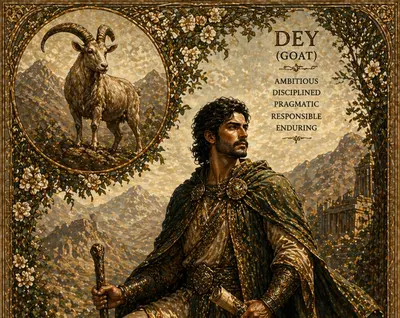
Shahrivar harmonises best with the fellow earth signs Ordibehesht (Bull) and Dey (Goat).
🌍 Shahrivar (Wheat Ear) Across Cultures
Shahrivar (Wheat Ear) has counterparts in other zodiac traditions around the world. While each culture brings its own symbolism and interpretation, these signs share deep astrological connections — whether through identical date ranges, the same archetype, or a shared animal cycle.
How Cross-System Relationships Work

Other Persian Zodiac Signs
Explore Other Zodiac Systems
Discover your sign in other ancient traditions from around the world.