Last updated:
Tir (Crab)
Persian Zodiac Sign · Water · Ruled by The Moon
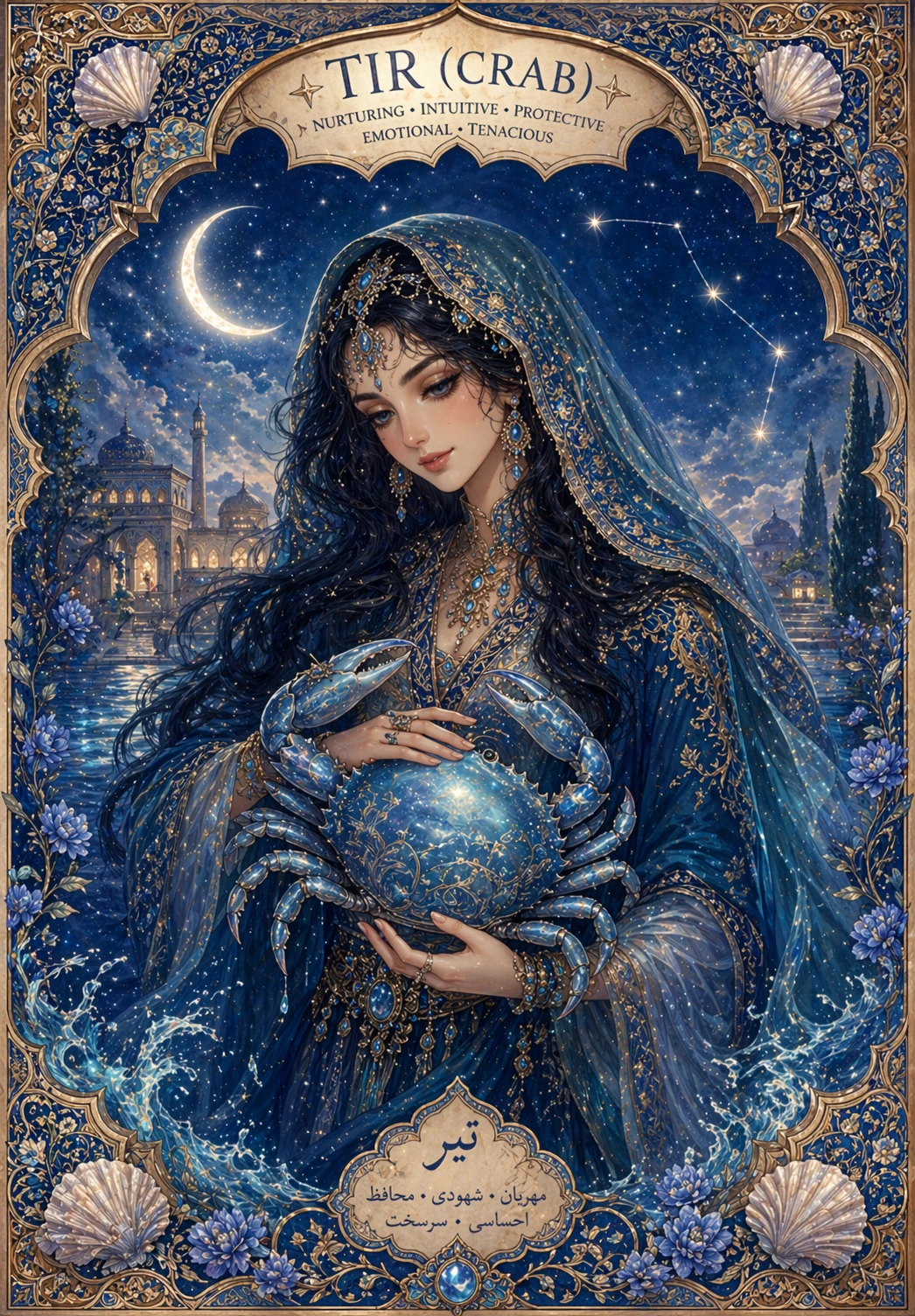 ♀
♀Tir (Crab)
Persian Zodiac Sign
Water
Ruled by The Moon
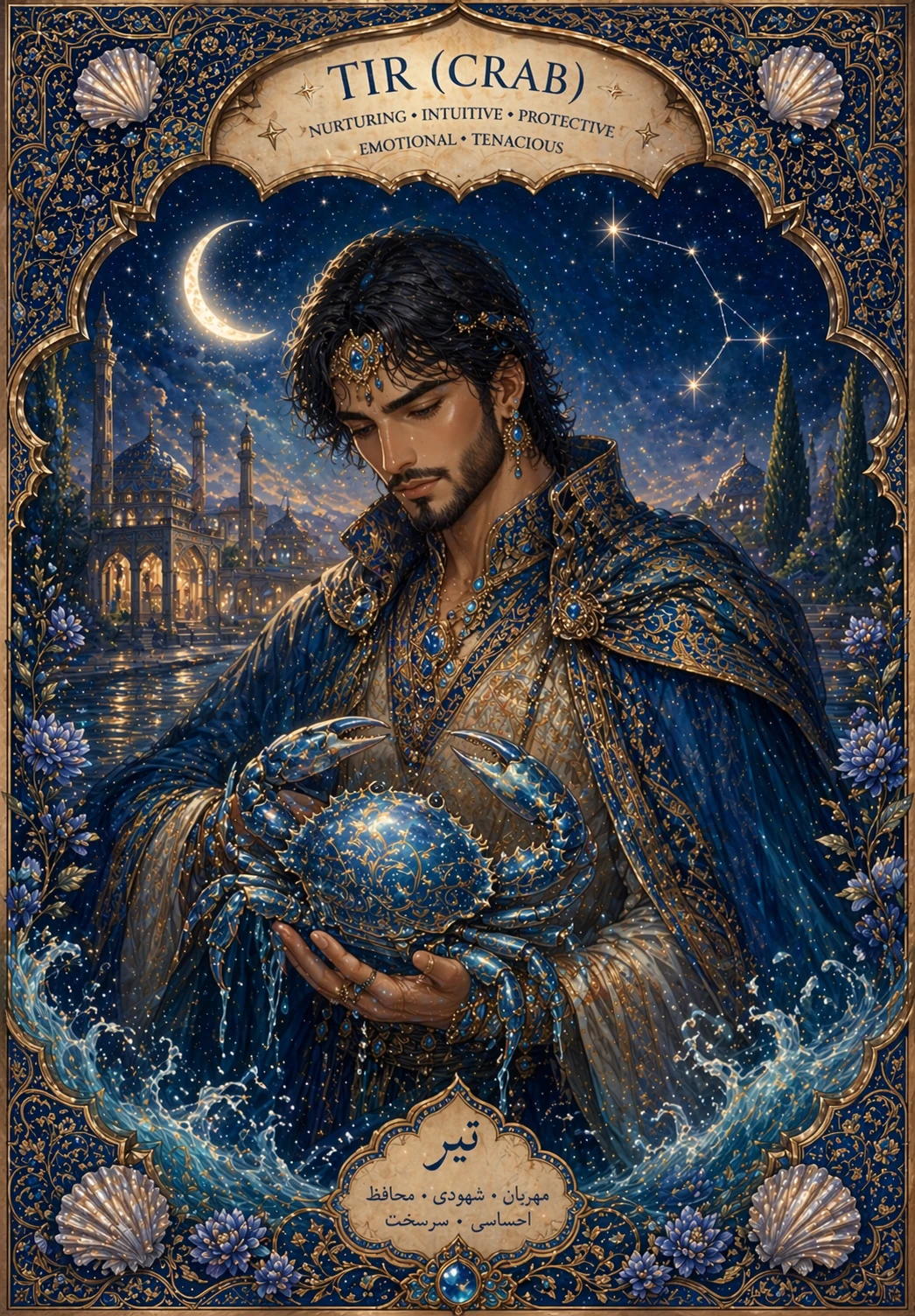 ♂
♂About Tir (Crab)
Tir, associated with the rain star Tishtrya that brings life-giving water to Persia, nurtures souls who are as deep as the Caspian Sea. The Crab builds its home with care and defends it with hidden strength. Those born under this sign carry the water of compassion in their hearts and the resilience of the tide in their spirits.
Tir is the fourth month of the Persian year, falling at the height of summer when Persia most longs for water. Aligned with the archetype of the Crab and ruled by the Moon, those born under this sign are as deep and tidal as the Caspian Sea — intuitive, nurturing, and fiercely protective of those they love. They build sanctuaries of warmth wherever they go and guard them with a hidden, tenacious strength.
The month is named for Tishtrya, the radiant star-divinity the ancient Persians identified with Sirius, the bringer of rain. In the great myth, Tishtrya does battle with Apausha, the demon of drought, and his victory unleashes the life-giving waters across the parched land. Tir people carry this same gift: an emotional depth that nourishes others like rain on cracked earth, and the tenacity to win, again and again, the battle to protect what they cherish.
Their sensitivity is double-edged. The same attunement that lets them read unspoken feelings can tip into moodiness, retreat into their shell, and a tendency to clutch old hurts long past their season. The mature Tir learns, like Tishtrya, to let the waters flow rather than dam them up — offering compassion without absorbing every pain — and becomes a steadfast source of nourishment and refuge for all who depend on them.
Learn more about the origins, history, and symbolism of this tradition on the Persian Zodiac overview.
Tir (Crab) at a Glance
- System
- Persian Zodiac
- Element
- Water
- Ruling Body
- The Moon
- Compatible With
- Aban, Esfand
- Lucky Color
- Pearl White
- Lucky Number
- 2
- Key Traits
- nurturing, intuitive, protective, emotional, tenacious
The Tir (Crab) Personality
Tir natives are nurturing, intuitive, and tenacious, with the emotional depth of the rain-bringing star they are named for. Ruled by the Moon, they create havens of warmth and defend their loved ones with hidden strength. Their growth lies in letting their feelings flow freely — offering compassion without retreating into their shell or clinging to past wounds.
Tir (Crab)in Love & Relationships
In love Tir is devoted, tender, and profoundly nurturing, building a warm home and an emotional bond that runs to the depths. They flow most naturally with fellow water signs Aban and Esfand, who can hold and match their intensity of feeling. Tir gives caring, loyal, protective love; their growth is to set gentle boundaries and to express hurt openly rather than withdrawing or holding silent grudges.
Tir (Crab)Career & Ambition
Ruled by the Moon, Tir excels in caring and creative vocations — nursing and medicine, counselling, hospitality, teaching the young, real estate, history, and the arts. They bring intuition and genuine compassion to everything they touch, nourishing whatever they tend. The Crab does its finest work where it can protect and care for others, provided it guards its own emotional reserves against depletion.
Mythology & Symbolism of Tir (Crab)
Tir is named for Tishtrya, the brilliant star-divinity the ancient Iranians identified with Sirius and revered as the bringer of rain. In the Avestan hymns he battles Apausha, the demon of drought, and his triumph releases the waters that renew the land — celebrated each year in the summer festival of Tiragan.
The Crab that gives the sign its emblem is the guardian of the home, building and defending its shelter with quiet tenacity. Through Tishtrya and the Crab, Tir unites the life-giving power of water with the protective devotion of the nurturer, casting the sign as the cherished source of refuge and renewal.
Key Personality Traits
Those born under Tir (Crab) are defined by a distinctive blend of personality qualities that shape how they navigate the world. These core traits, drawn from centuries of Persian astrological tradition, reveal the essence of this sign.
Strengths & Weaknesses
Every zodiac sign carries a duality — gifts that empower and shadow traits that challenge. Recognizing both sides of Tir (Crab) helps harness its full potential for personal growth.
✨ Strengths
Deeply intuitive and fiercely protective of loved ones. Tir people create sanctuaries of warmth and safety wherever they go. Their emotional intelligence allows them to read unspoken feelings, and their tenacity in defending family is legendary.
⚡ Weaknesses
Can be moody, overly sensitive, and prone to retreating into their shell. May use guilt as a tool and hold onto past hurts for far too long. Their fear of vulnerability can lead to passive-aggressive behavior.
Lucky Attributes
Ancient Persian astrologers associated Tir (Crab)with specific auspicious elements. Aligning with these can help amplify the sign's positive energy.
Compatibility
Astrological compatibility in the Persian tradition examines how Tir (Crab)'s energy harmonizes with other signs — revealing which pairings thrive together in love, friendship, and partnership.
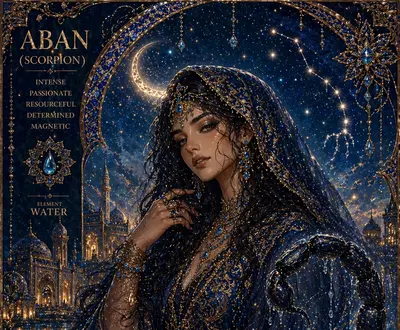
Tir (Crab) is most compatible with: Aban, Esfand
⭐ Tir (Crab) Celebrities
These well-known personalities share the Tir (Crab) sign.
Abbas Kiarostami
June 22, 1940
Kiarostami's deeply intuitive and emotionally layered cinema reflects Tir's Moon-ruled sensitivity — nurturing stories that protect the humanity within.
Jafar Panahi
July 11, 1960
Panahi's tenacious filmmaking despite persecution embodies Tir's protective Moon energy — nurturing artistic truth with fierce emotional resilience.
Golshifteh Farahani
July 10, 1983
Farahani's emotionally intuitive performances and protective devotion to authentic storytelling channel Tir's Moon-blessed nurturing depth.
Dariush Eghbali
July 5, 1951
Dariush's emotionally powerful ballads and protective love for Iranian cultural identity embody Tir's Moon-ruled nurturing spirit and tenacious devotion.
Kimia Alizadeh
July 10, 1998
As the first Iranian woman to win an Olympic medal, Alizadeh's tenacious spirit and intuitive fighting instincts reflect Tir's protective Moon energy.
Princess Diana
July 1, 1961
Diana's nurturing compassion and intuitive emotional connection with people embody Tir's Moon-ruled protective warmth and deep empathy.
Frequently Asked Questions about Tir (Crab)
What are the dates for the Tir sign?
Tir runs from June 22 to July 22, the fourth month of the Persian solar calendar.
What does the month of Tir mean?
It is named for Tishtrya, the star-divinity (identified with Sirius) who brings rain by defeating the drought-demon Apausha in Zoroastrian myth.
Which Persian signs is Tir most compatible with?
Tir harmonises best with the fellow water signs Aban (Scorpion) and Esfand (Fish).
🌍 Tir (Crab) Across Cultures
Tir (Crab) has counterparts in other zodiac traditions around the world. While each culture brings its own symbolism and interpretation, these signs share deep astrological connections — whether through identical date ranges, the same archetype, or a shared animal cycle.
How Cross-System Relationships Work


Other Persian Zodiac Signs
Explore Other Zodiac Systems
Discover your sign in other ancient traditions from around the world.